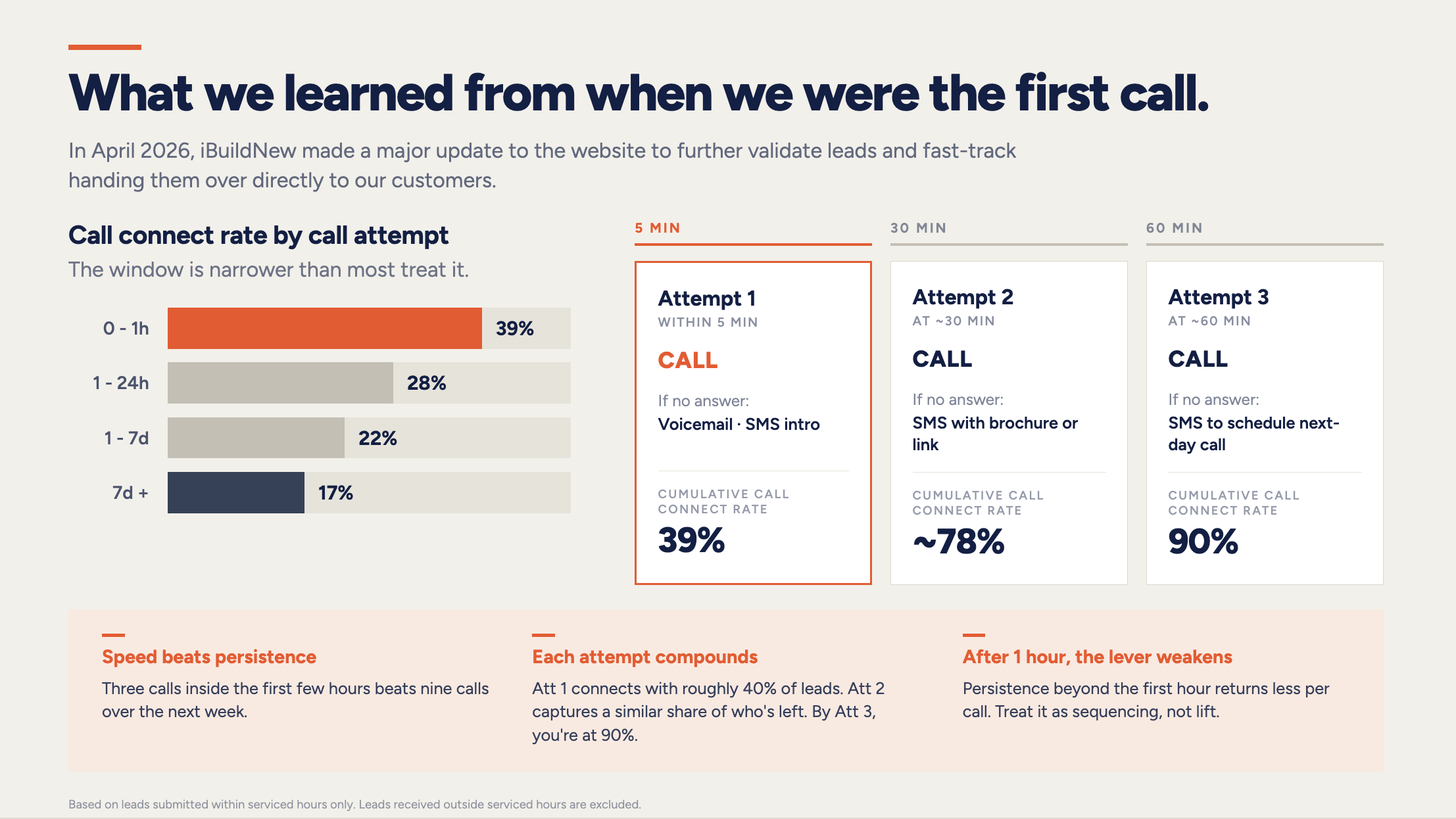
A new home enquiry is one of the few moments in the buying journey where a buyer's interest is at its absolute peak. They've just compared their options, made a decision to reach out, and are, for a short window, genuinely ready to talk. What happens in the hour after that enquiry lands does more to decide the outcome than almost anything that happens afterwards.
Enquiring about a new home isn't a small step. By the time a buyer submits their details, they've usually already done a fair amount of comparing, thought about budget, and worked up the confidence to put their name forward. Right at that moment, they're about as engaged and ready to talk as they'll ever be.
That's what makes the first hour valuable, not that the opportunity disappears afterwards, but that timing is genuinely on your side while the enquiry is still front of mind for the buyer. A call made in that window gets to meet a buyer who's already leaning in, rather than one who needs to be re-engaged from scratch.
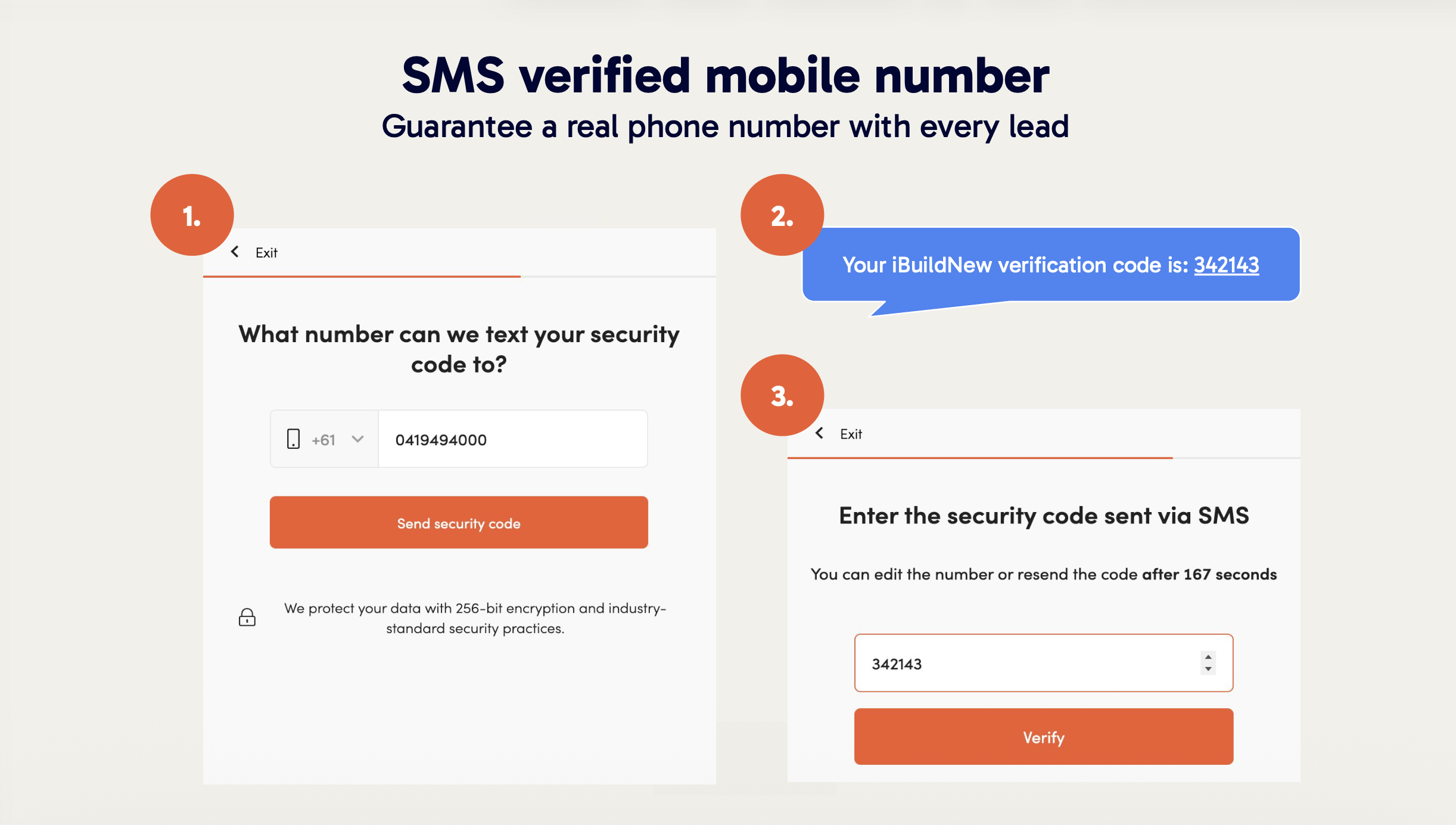
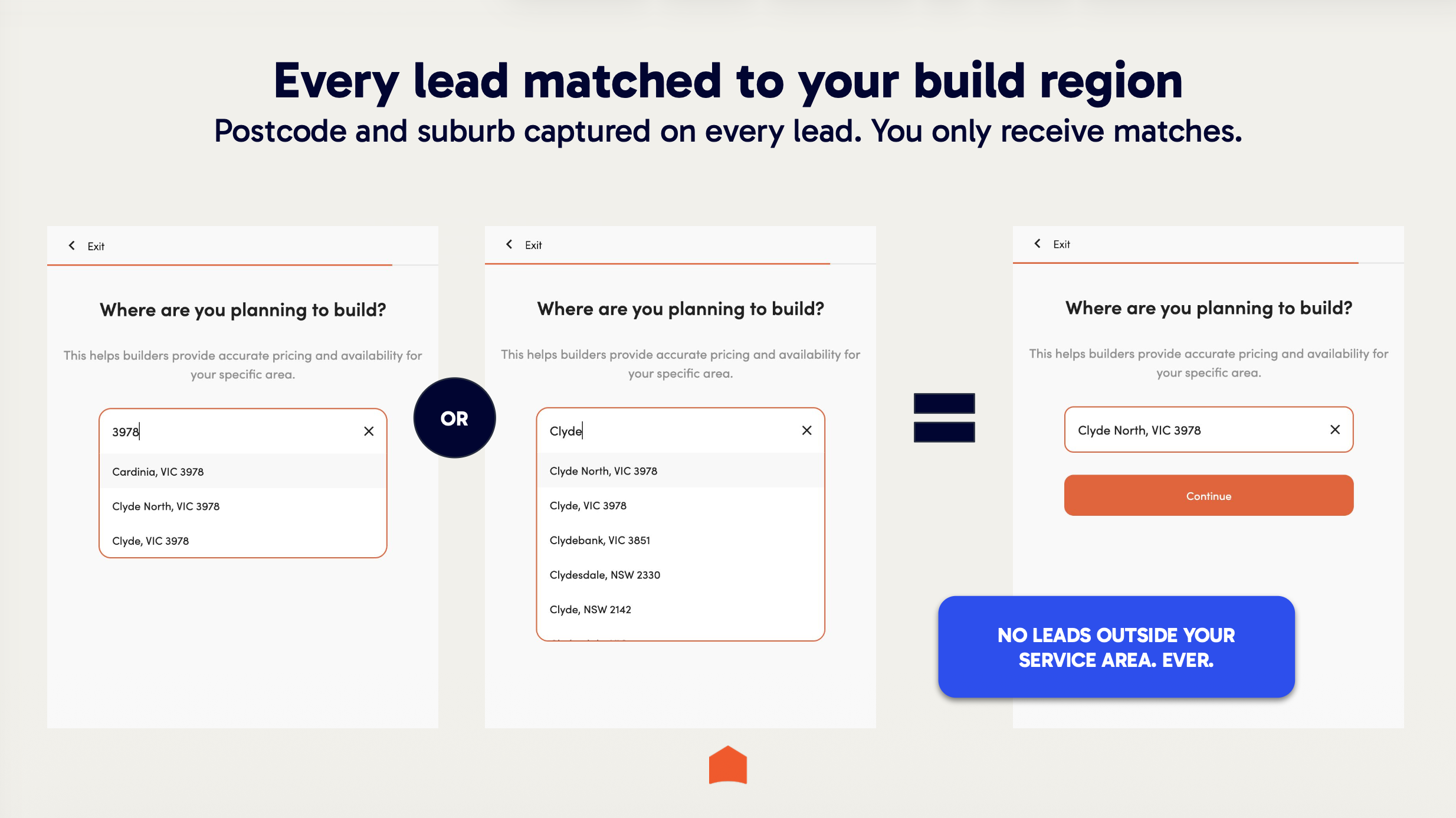
None of this matters if the contact details aren't accurate. A phone number that bounces or an enquiry from outside the area a business actually services turns a fast follow-up into wasted effort, and worse, it trains a sales team to expect that speed doesn't pay off. This is why verification matters as much as speed itself: a mobile number confirmed through SMS, are what make a fast first call worth making in the first place.
Put together, verified contact details and immediate delivery are what turn a first hour of opportunity into a first hour of actual conversations, rather than a first hour of unanswered calls to numbers that were never going to pick up.
Both Homeshelf.com.au and iBuildNew.com.au started life running a call centre model, where every enquiry was picked up by a concierge team before it ever reached a builder or estate. Ahead of completing the changes to the website that allowed us to move away from this model, a lot of time went into optimising it: testing when a call landed best, how quickly a concierge could reach a new enquiry, and what actually made the difference between a buyer who engaged and one who didn't. Those insights are part of what we now share with the teams we work with.
In April 2026, we moved away from that inherited concierge model altogether, in favour of digital lead validation that connects a verified enquiry straight to the experts who know the brand and the product: the builder's or the estate's own team.
That change wasn't about removing a step for its own sake. It was about making sure the first conversation a buyer has is with someone who can speak to their specific design, estate, or package in real depth, rather than a generalist working from a script.
Not every enquiry needs to be effortless to complete. Asking a buyer to verify their mobile number by SMS, and to answer a couple of questions about what they're after, adds a small amount of friction to the process, deliberately.
About 50% of users who start the enquiry process drop off at that point. A buyer who continues through it has demonstrated something a 'single-field, no-friction' form never can: that they were willing to spend a little more and handover a real phone number ready to have a call with your team.
That's a meaningful signal before the first call is even made. It means the enquiry landing in your CRM isn't someone who clicked out of idle curiosity, it's someone who has already shown a degree of commitment and is expecting a call. The friction isn't there to slow things down for its own sake, it's there so the speed that follows is being spent on a considered enquiry rather than a stray click.
Speed on its own is still just a fast phone call. Add context to it, and that same speed becomes a conversation that feels tailored to the buyer from the first sentence. The real advantage comes from combining both: reaching a buyer while they're most engaged, with enough detail to make that conversation feel specific to them rather than a script read down a list.
Not every enquiry arrives at a convenient time. A meaningful share land in the evening, on a weekend, or overnight, when no one on a sales team is at a desk to make the most of that peak moment of interest. The usual result is a form receipt and a promise of a callback the next morning, by which point some of that initial engagement has naturally cooled.
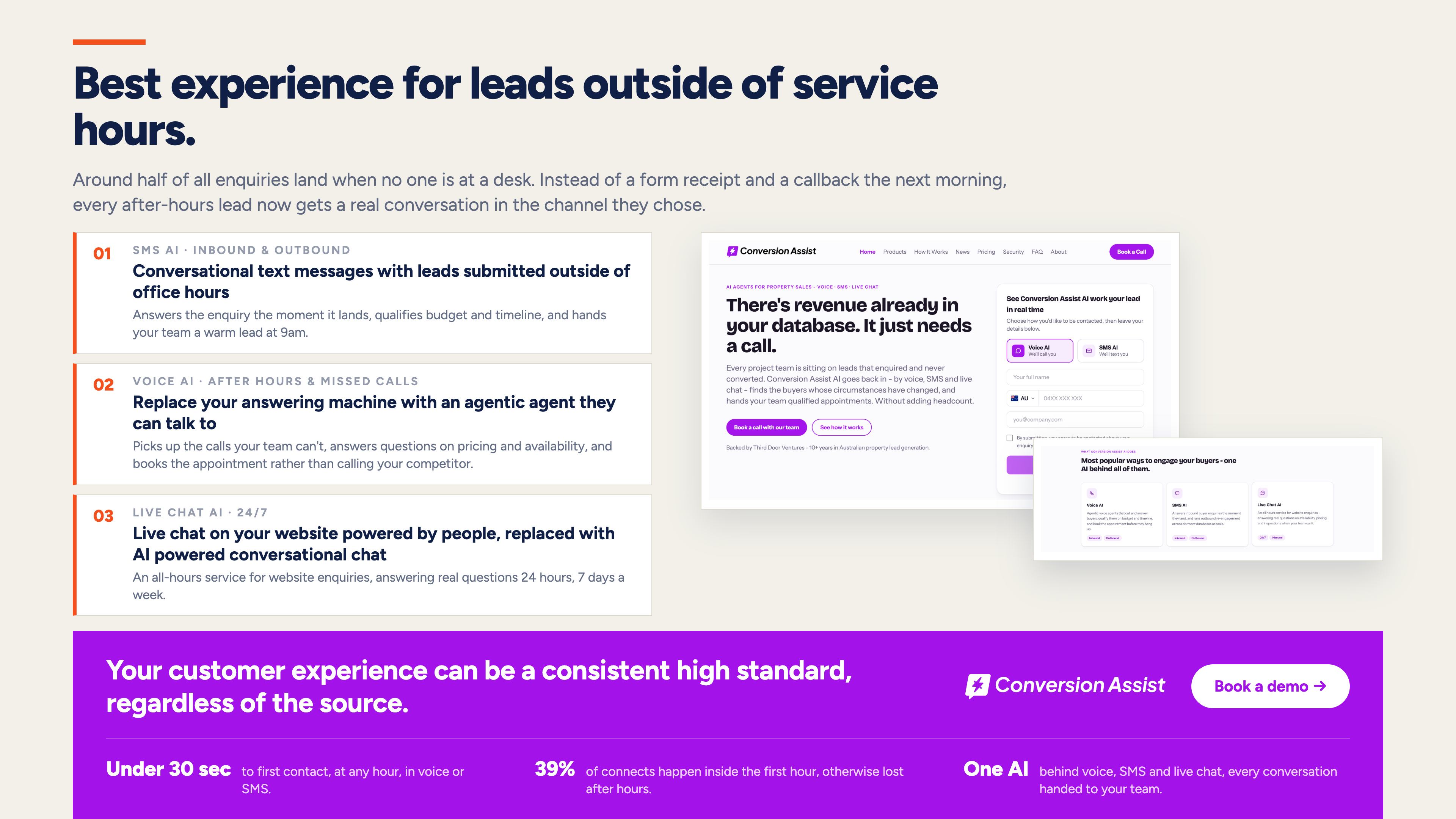
This is the gap conversational AI is built to close.
Rather than a missed call going to voice mail or an after-hours enquiry sitting untouched until morning, a tool like Conversion Assist engages the buyer straight away, by SMS, by voice, or through live chat, depending your team preference. It qualifies the basics, budget, timeline, what they're after, and hands a sales team an already-warmed lead to pick up first thing, rather than a cold submission sitting at the bottom of an inbox.
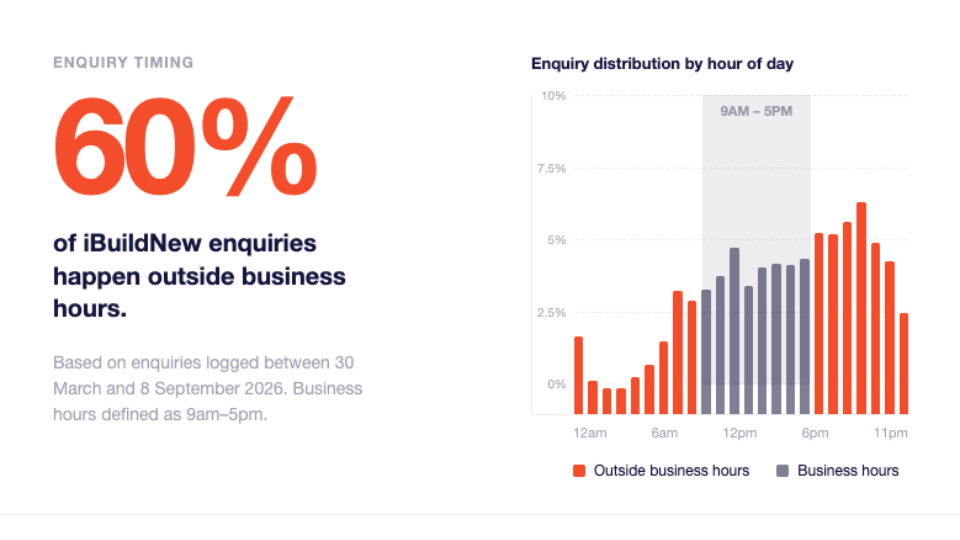
The goal isn't to replace the human conversation, it's meeting the buyer with a next step on their timeline while their interest has peaked.
Support your team with ConversionAssist to provide a touch point outside of office hours across all your lead sources.
The first hour after an enquiry is a genuine opportunity to talk to a buyer while their interest is at its peak. Verified, well-timed leads, delivered with enough context to make that first conversation count, are what turn that opportunity into a real advantage.
How that lead reaches the person making the call matters too. Where a business's systems allow for it, sending a verified lead straight into the CRM a sales team already works from means less of that first hour is spent on internal handling before anyone's actually picked up the phone. Some teams are set up so a person allocates leads by design, and that's a perfectly reasonable way to run things. Either way, the principle is the same: the more directly a lead reaches whoever's going to call, the more of that first hour is left for the conversation that actually matters.
.jpg)
.png)
.png)
.png)
.png)