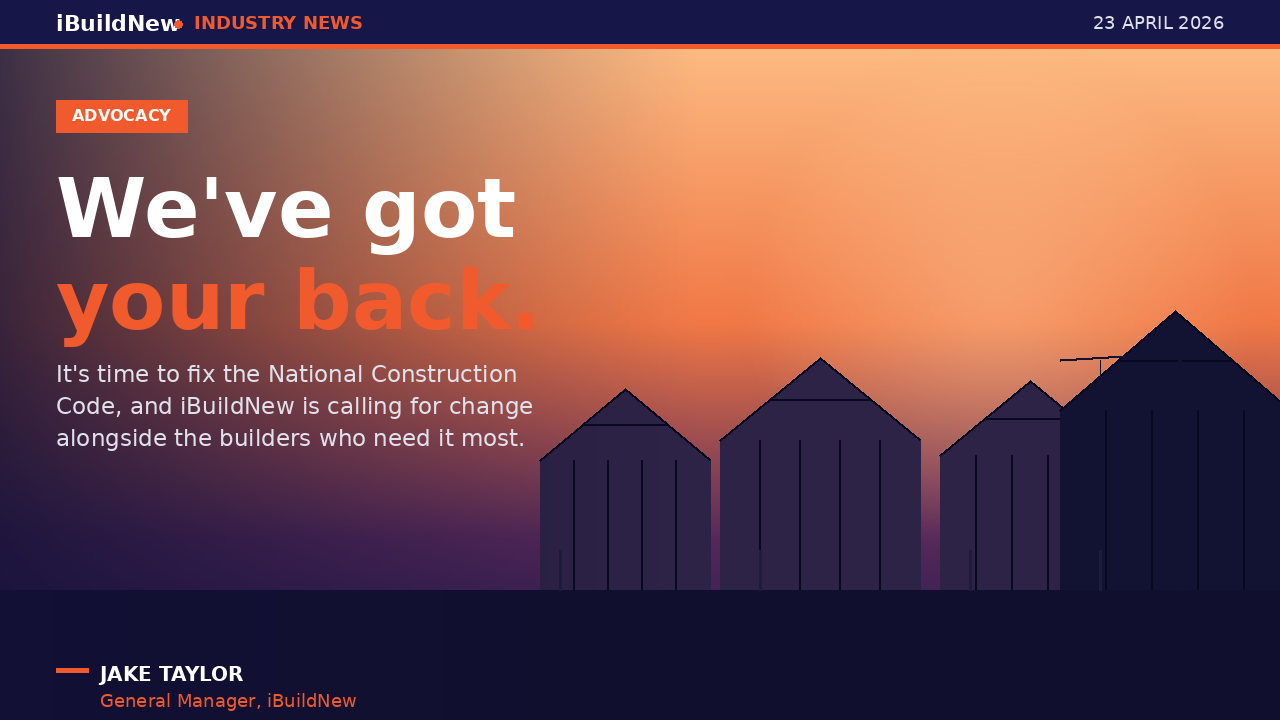
Australia's home builders are absorbing costs they were never meant to carry, and the regulatory framework that governs how homes are built is making it worse.
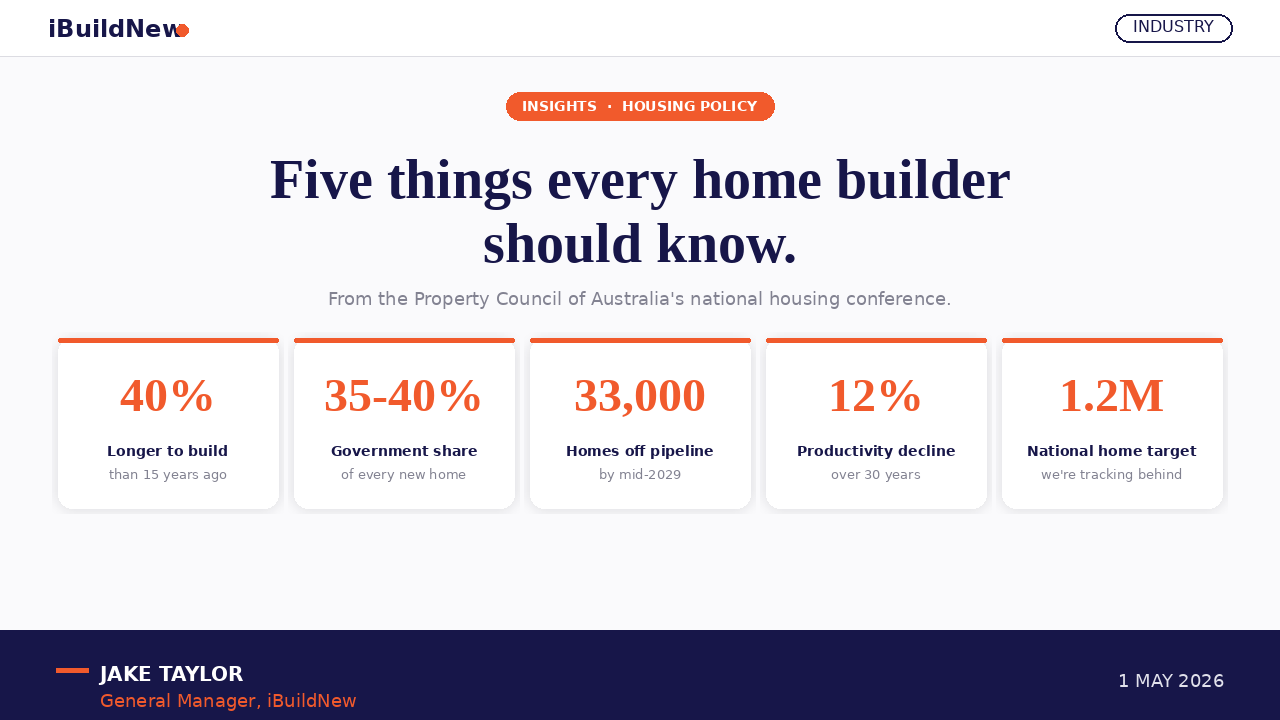
The National Construction Code, the document that sets standards for every new home built in this country, has grown into something that no longer serves the industry it was designed to support. Eight times its original length. Three hundred additional defined terms. Over one hundred reference documents. Thousands of pages that builders are expected to navigate while simultaneously managing supply chain disruptions, rising material costs, and fixed-price contracts that leave no room for error.
iBuildNew stands with the Master Builders Australia, Housing Industry Association, and the Alliance of Industry Associations in calling for meaningful, immediate reform.
Before any conversation about regulation, it's worth understanding the environment builders are operating in right now.
Construction costs have risen between one and five per cent this year alone, driven largely by Middle East supply chain disruption that has pushed diesel to $3.20 per litre nationally and sent petrochemical plastics, PVC, polyethylene, polypropylene, up by as much as 40 per cent. Cabling and piping are among the hardest-hit products. On a standard four-bedroom home, the Housing Industry Association estimates builders are absorbing an extra $5,000 in material costs, with no ability to pass that through on fixed-price contracts.
The insolvency figures speak to how little runway builders had before these latest pressures arrived. ASIC data shows 3,490 construction companies entered insolvency in 2025, nearly double the pre-pandemic rate.
These are not abstract numbers. They are businesses, employees, and partially-built homes.

What's different about the NCC issue is that it isn't a global supply chain problem or a geopolitical event outside anyone's control. It's a homegrown policy problem with a homegrown solution.
The Productivity Commission estimates the regulatory cost burden on housing sits at $47.5 billion per year, up to $320,000 per new home. The code that drives much of that cost has expanded without discipline over decades, accumulating complexity that slows approvals, increases compliance costs, and makes it harder for builders to operate efficiently even before a single slab is poured.
The Alliance of Industry Associations is calling for the code to be reduced by at least 25 per cent. The HIA has called for it to be digitised and made AI-searchable so builders can actually navigate it in practice. These are not radical asks. They are the minimum required to bring the code back to something functional.
The federal government has signalled openness to reform while keeping changes on hold pending further consultation. That consultation needs to result in action, not another review cycle.

iBuildNew is a platform built to connect Australians building new homes with the builders who deliver them. We see the direct impact of a constrained, cost-pressured industry on the national housing crisis, the people trying to enter the market, buyers who delay decisions, enquiries that stall, builds that stretch beyond what was contracted.
We are calling on the federal government to:
Australia has a target of 1.2 million new homes by 2029. That target does not get met with a building code that costs the industry $47.5 billion a year to comply with. It gets met by removing every barrier that doesn't need to be there.
The builders on our platform are doing the hard work. The least the regulatory environment can do is get out of their way.
.jpg)
.png)
.png)
.png)
.png)