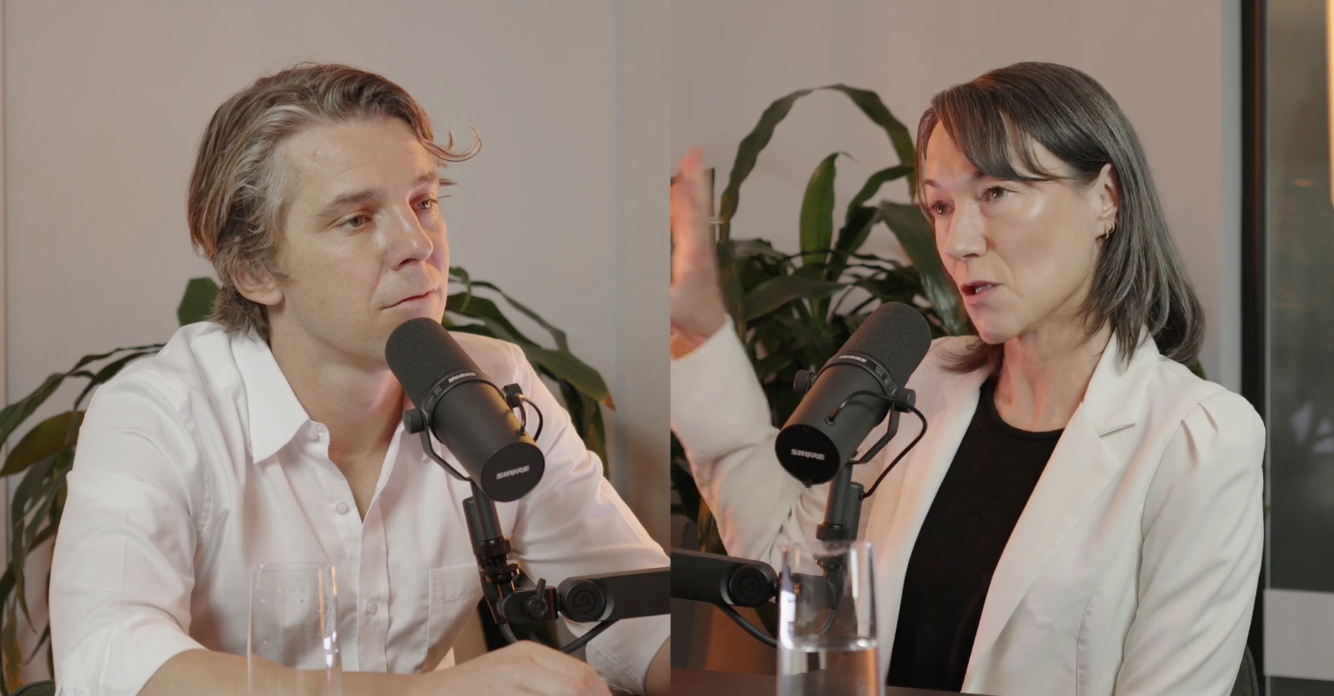
An iBuildNew Industry conversation with Penny Forrest, General Manager Victoria, AVID Property Group — April 2026
AVID Property Group has had a defining year. Following its August 2025 acquisition of AV Jennings — one of the oldest and most recognisable names in Australian residential development — AVID now sits among the country's top five residential developers, with a portfolio of 69 projects and a gross development value of roughly $7 billion.
We sat down with Penny Forrest, AVID's General Manager for Victoria, to unpack what that scale means on the ground: how the Melbourne greenfield market is behaving in 2026, where AVID is placing its Victorian bets, and why the state's planning system remains one of the biggest structural drags on housing affordability.
Here's what stood out.
The AV Jennings acquisition reshaped AVID's national footprint in a single move. The combined business brings deep east-coast presence, legacy master-planned assets, and a delivery pipeline few competitors can match.
For Forrest, the integration has been less about "bolting on" and more about pairing AV Jennings' brand equity with AVID's operating discipline. Practically, it means more capital to deploy, more sites to activate, and a broader set of partners — from civil contractors to home builders — now working under the AVID banner.
Around 12,500 lot sales were recorded across Melbourne's greenfields in 2025 — a step up from the lows of the previous cycle, but still well below the 20,000-plus volumes the corridor produced pre-2022.
Forrest's read on 2026 is measured. Interest rates remain the single biggest drag on buyer confidence, and global economic uncertainty is keeping purchasers cautious. AVID is responding with disciplined stock releases — smaller, more frequent drops designed to match demand rather than flood it. It's a deliberate shift from the volume-at-all-costs approach that defined the previous decade, and one other developers are now adopting.
For builders, the takeaway is that land supply in 2026 will be steady but not abundant. Buyers will have options, but those options will be spread thinner across more corridors.
AVID's Victorian pipeline now runs to nine active communities. The standout is Lindarum in Wollert, on Melbourne's northern growth front. The project still has around 1,000 homes to deliver, alongside a major town centre component that will serve as the community's retail, services, and civic anchor.
The town centre is a deliberate signal. Greenfield communities are increasingly judged on whether they deliver the amenities buyers actually need — not just lots — and AVID is leaning into that playbook rather than relying on the house-and-land formula alone.
If there's one issue Forrest returns to most pointedly, it's Victoria's Precinct Structure Planning (PSP) process — the statutory planning framework that governs how new growth areas are rezoned, serviced, and released for development.
The current PSP process averages five years from kick-off to completion. That's five years of holding costs on land that can't yet be sold, five years of design iterations while construction costs move, and five years where competitors can't enter a corridor.
The downstream effects are well understood but worth restating:
Forrest is clear that PSP reform should sit near the top of the Victorian Government's housing agenda. Faster, more predictable planning wouldn't just benefit developers; it would directly lower the cost of new homes for buyers in the outer growth corridors.

One of the more interesting operational details from the conversation is AVID's customer ambassador program. Rather than handing buyers off from sales to settlements to construction in the traditional relay, AVID assigns an ambassador who maintains the relationship from the point of sale through to handover — and often beyond, into community life.
It's a small shift that matters. Greenfield buyers are, by definition, purchasing something that doesn't exist yet. A single point of contact who can answer questions, chase up the builder, flag issues early, and welcome them into the community measurably changes how they talk about the brand afterwards.
For builders partnered with AVID, the model also raises the bar. A buyer with a dedicated ambassador is a buyer whose construction experience will be closely monitored, and build partners are increasingly selected with that accountability in mind.
Forrest frames diversity not as an HR or compliance exercise, but as commercial alignment. AVID's customer base spans first-home buyers, growing families, downsizers, and multigenerational households, and its leadership team is structured to reflect that breadth.
The logic is straightforward: teams that mirror their market tend to understand it better, design for it better, and sell to it better. It's a point worth absorbing in an industry where the customer demographic has shifted faster than the average boardroom.
Two operational points stand out for anyone watching how large developers are professionalising:
If you're a builder targeting greenfield partnerships in Victoria, those three words — reputation, agility, collaboration — are a useful checklist.
The through-line of the conversation is that Victoria's greenfield market is professionalising. Developers are more measured, buyers are more cautious, customer experience is a genuine differentiator, and planning reform is increasingly recognised as the biggest lever left to pull on affordability.
For developers, investors, and builders working in this space, the AVID playbook is worth studying closely: disciplined scale, operational rigour, and a clear-eyed view of where the structural pressures actually sit.

.png)
.png)
.png)
.png)